We’d love to hear from you. Whether you’re ready to commission a song, collaborate on a creative project, or simply want to ask a question — Sacred Track Studios welcomes you.
You can also connect with us through our social media channels.
We respond to all genuine enquiries within 2–3 business days. Every connection matters. Every story is welcome.
Whistle Beyond The Levee
1. Watermark on the Door
Opens with the flood arriving at home. The rising watermark becomes the first physical sign that ordinary Delta life is about to disappear beneath the river.
2. Mud Where the Cotton Grew
Surveys the aftermath. Cotton fields, homes and livelihoods have become mud, establishing the scale of what has been lost.
3. Levee Boss Coming
Displaced men are drawn or forced into levee work. The boss’s arrival signals that survival now means labouring under somebody else’s authority.
4. Shovel and a Number
Individual identity begins disappearing into the labour system. A man becomes another worker, another shovel and another number on the line.
5. Sunup to Lantern Light
Captures the exhausting length of the working day, from first light until darkness, building and repairing the levees.
6. The Guard on Horseback
The album becomes darker as armed supervision and restricted movement reveal that the workers are not entirely free to simply walk away.
7. Levee Camp Holler
The workers turn labour into rhythm. Hollers and call-and-response become a way to coordinate work, endure hardship and preserve identity.
8. Whistle Across the Water
For the first time, a distant train whistle introduces another possibility. Beyond the river and levee camp lies movement, distance and perhaps freedom.
9. Yellow Dog Crossing
The railroad enters the story directly, invoking the Delta rail lines and the legendary crossing where different routes opened towards other places.
10. Ticket I Can’t Afford
Freedom is visible but still financially out of reach. The narrator can hear the trains and imagine leaving, yet cannot afford the fare.
11. Freight Train Midnight
Necessity replaces permission. The railway at night becomes a dangerous but tangible route away from the life that has confined him.
12. Northbound Smoke
The decisive movement north begins. Smoke trailing behind the train becomes a symbol of distance growing between the traveller and the Delta.
13. Moorhead Junction
At the famous rail crossing, different tracks represent different futures. The traveller reaches a literal and symbolic crossroads.
14. The River Behind Me
With Mississippi receding into the distance, the narrator reflects on the flood, camps, labour and people being left behind.
15. Whistle Beyond the Levee
The finale transforms the whistle heard earlier into the album’s central symbol: there was always another world beyond the levee. The narrator has finally reached towards it.
1. Dry Earth Morning
Opens at dawn on a struggling Delta farm. The cracked earth immediately establishes the uncertainty of a life dependent upon land, weather and someone else’s property.
2. Cotton Row Blues
Moves directly into the fields: repetitive labour, aching bodies and endless cotton rows define the daily existence of the sharecropping family.
3. Ledger Man’s Smile
Introduces the economic trap. The plantation ledger always seems to show another debt, no matter how much cotton is picked or how hard the family works.
4. Empty Supper Table
Brings the consequences of that system inside the home. Hard work does not necessarily mean enough food, and parents confront the pain of hungry children.
5. Rain That Won’t Come
Drought tightens its grip. Crops fail, dust rises and the family waits for rain that may determine whether they survive another season.
6. Side Road Offer
Desperation creates temptation. Someone offers the narrator a questionable way of making money, forcing him to choose between the law and feeding his family.
7. Midnight Run
The choice has been made. Under darkness, the narrator takes to the back roads for dangerous illegal work that pays better than another day in the cotton rows.
8. River Rising Warning
The story changes abruptly as word spreads that the Mississippi and its tributaries are rising. Drought has given way to an entirely different threat.
9. Washed Away Again
Floodwater destroys crops, possessions and fragile homes. What little the family managed to build is taken by forces completely beyond their control.
10. Dust to River
The album’s turning point. Having endured both drought and flood, the narrator realises that remaining on the land means repeating the same cycle of loss.
11. Field I Left Behind
He finally walks away from the cotton fields. It is not simply escape: there is grief in leaving the only home, land and way of life he has known.
12. Rail Yard Nights
The journey north begins around freight yards, stations and temporary work. The narrator is now between two lives: no longer a sharecropper, but not yet secure anywhere else.
13. Work Line Northbound
The finale follows the railway north in search of industrial work and a different future. The Delta remains behind physically, but its hardship, memories and blues travel with him.
1. Cottonfield Morning
Opens at daybreak in the Delta. The fields wake, work begins, and the landscape, poverty and resilience of Mississippi life are established.
2. Dust Road Mercy
Moves from the fields onto the back roads, following ordinary people searching for work, kindness and enough mercy to make it through another day.
3 Tin Cup & River Smoke
Brings us to the Mississippi River, where poverty, riverboats, smoke and wandering bluesmen become part of the album’s wider world.
4. River Don’t Care
The river becomes a character itself: ancient, indifferent and continuing to flow regardless of human hardship, love or loss.
5. Storm Over Yazoo
The first major dramatic peak. A violent Delta storm brings flooding, fear and the reminder that nature can take away what little people possess.
6. Empty Table Blues
After the storm comes scarcity. An intimate song about hunger, poverty and the quiet pain of having a family to feed when there is nothing on the table.
7. Copper Still Blues
Desperation creates opportunity. Hidden whiskey stills provide illegal income when legitimate work cannot put food on that empty table.
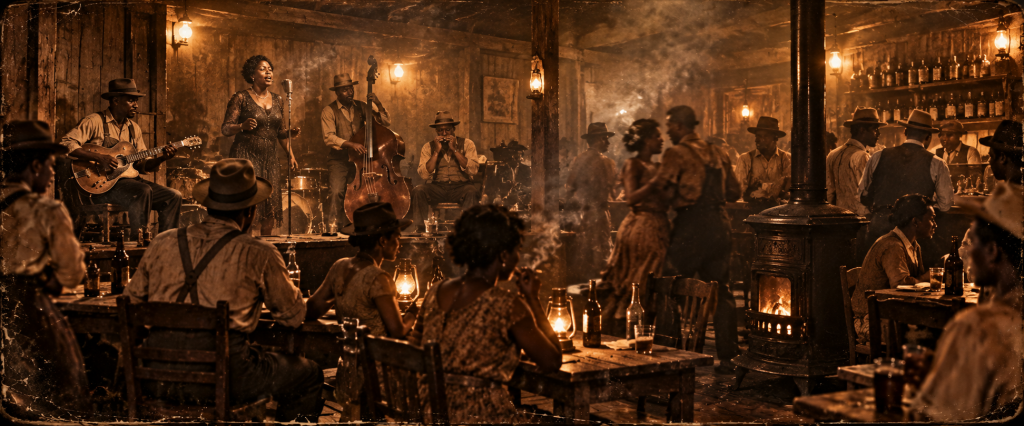
8. Juke Joint Saturday
The album suddenly comes alive. After six days of labour and worry, Saturday night means whiskey, dancing, guitars and a few precious hours of escape.
9. Broken Letter Blues
The celebration gives way to something personal: a letter carrying news of lost love, separation or a relationship that has finally ended.
10. Chain Gang Road
The darkest chapter. Prison labour, punishment and lost freedom show another brutal reality faced by poor people caught within the system.
11. Rail Line Lament
The sound of the railway represents both escape and separation: people leaving Mississippi for work and opportunity while others remain behind.
12. Ashes by the Creek
A reflective song about what remains after loss: an abandoned home, extinguished fire, memories and the physical traces of lives that have moved on.
13. Back Porch Prayer
After everything endured, the album becomes quiet. Guitar, evening air and a simple prayer bring faith, gratitude and acceptance rather than easy answers.
14. New Ground Rising
The finale turns towards renewal. Morning returns, new ground is broken and another generation moves forward carrying the scars, stories and music of Mississippi with them.
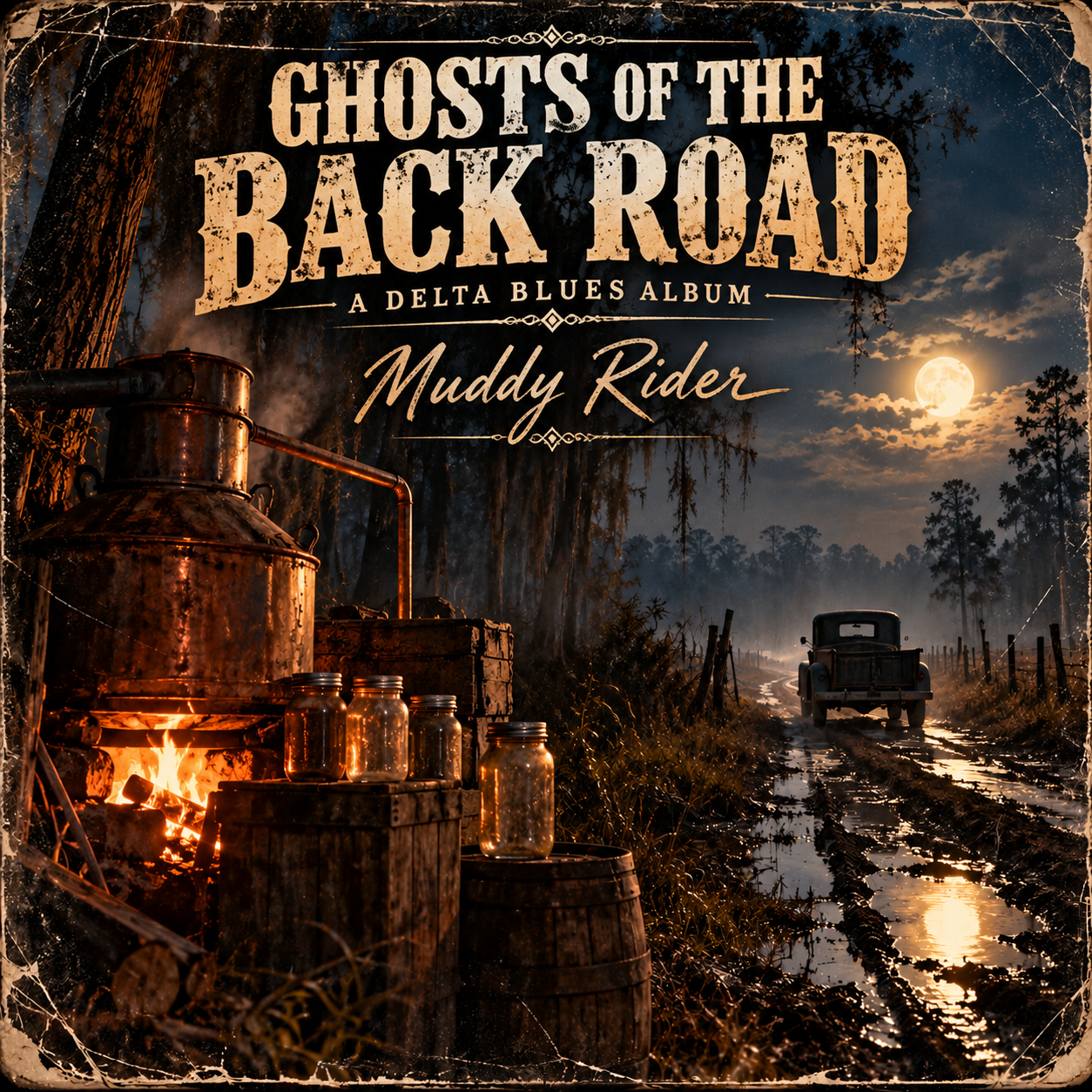
Ghosts of the Back Road
1. Dust Road Beginning
The opening chapter, setting out along the dusty Delta back roads where poverty, survival and opportunity begin to cross paths.
2. White Lightning Baptism
An initiation into the dangerous world of homemade whiskey, where corn, fire and desperation turn moonshine into a means of survival.
3. Fire in the Trees
Deep in the woods, a hidden still burns through the night, its distant glow signalling both livelihood and danger.
4. Last Jar Pouring
The final jars come off the still before dawn, capturing the craft, secrecy and tension surrounding an illegal night’s work.
5. Signal on the Fencepost
Simple signs become a back-road warning system, carrying messages that revenuers, strangers or trouble are approaching.
6. Back Road Runner
A moonshine runner takes to the forgotten roads, moving illegal whiskey under darkness while trying to stay one turn ahead of the law.
7. Swamp Water Hiding
The swamps provide cover for stills, whiskey and men who know that survival sometimes depends upon disappearing into the landscape.
8. Revenuer Wind
Word travels that federal agents are closing in, bringing an atmosphere of suspicion, fear and approaching trouble.
9. Burn the Still Down
When discovery becomes inevitable, the still must disappear, destroying the very thing that has been keeping families alive.
10. Chain Gang Morning
The consequences of being caught arrive with daylight: hard labour, lost freedom and the relentless rhythm of punishment.
11. Juke Joint Pay Day
After hardship comes Saturday night, when hard-earned and sometimes illegally earned money buys whiskey, music, dancing and a few hours of freedom.
12. Sweet Lila Don’t Wait
A more personal blues about the woman left behind, waiting for a man whose dangerous life on the back roads may prevent him ever coming home.
13. Southbound Shadow
A solitary figure moves south again, carrying memories, regrets and the knowledge that the past is travelling with him.
14. Ghosts of the Back Road
The closing reflection. The stills are cold and many of the people are gone, but their lives, struggles and music remain like ghosts travelling those old roads.